
Why Ants Love Your Toddler's Juice Box (and How to Stop Them)
Disclosure: This post contains affiliate links. If you make a purchase through these links, I may earn a small commission at no extra cost to you. We only recommend products that meet our safety standards for families and pets.
The Short Answer: Why are ants so obsessed with juice?
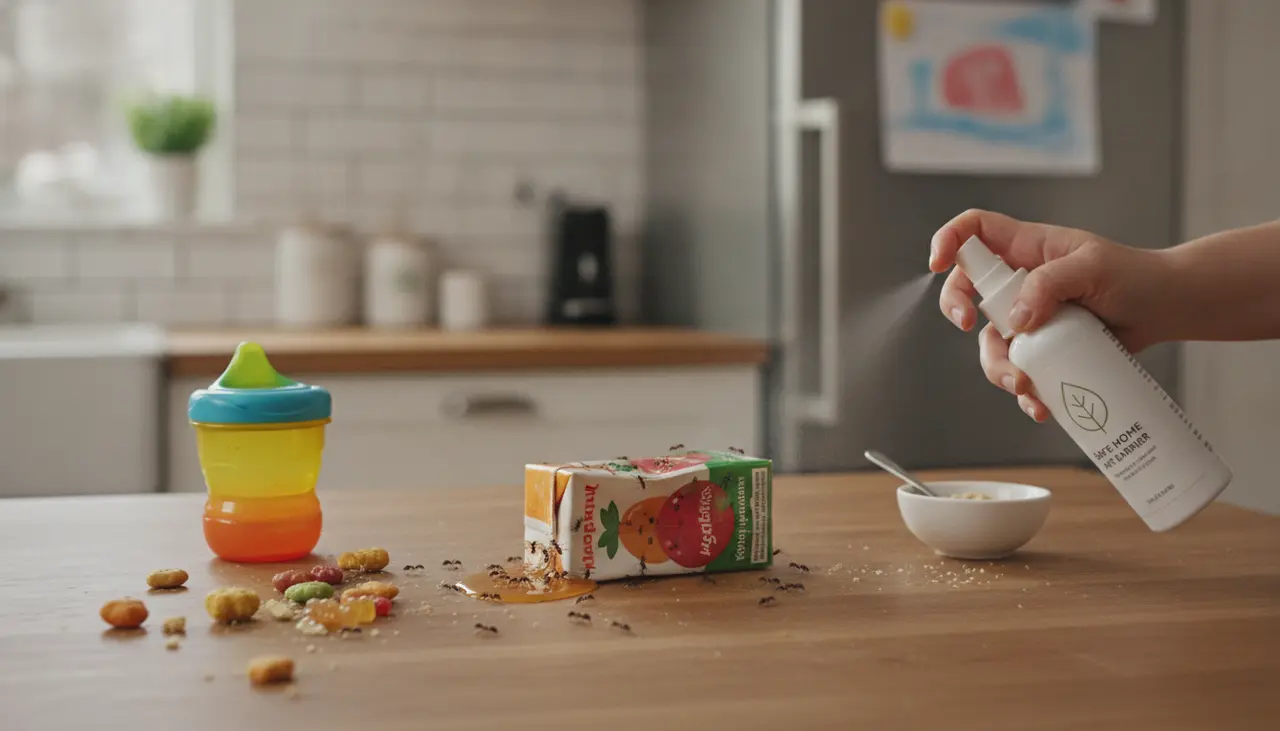
Ants are biologically programmed to seek out high-energy food sources to sustain their colony, and nothing provides a quicker energy boost than glucose and fructose. Ants are attracted to sugar because it is a dense carbohydrate that is easy for them to transport and store. A toddler’s juice box—often packed with concentrated fruit sugars—is essentially a goldmine for "sugar ants" (like Odorous House Ants). Once a single scout ant finds a sticky straw or a small spill, it leaves a pheromone trail that tells hundreds of its siblings exactly where to find the feast.
---
A Parent’s Guide to the "Sticky Situation"
I know how stressful it is. You finally sit down after a long day, look over at the play area, and see a tiny, marching line of ants heading straight for a discarded apple juice box. It feels like no matter how much you clean, they find that one hidden drop of sweetness under the couch.
This guide is for the busy parent who doesn't have time for an expensive professional visit and refuses to spray harsh, industrial chemicals where their children play. We’re going to look at why these pests are so persistent and how you can stop them using simple, safe, and effective methods that fit into a nap-time window.
Why Your Kitchen is an Ant Magnet
Most common household ants are "opportunistic foragers." They aren't trying to be your roommates; they are just following their noses (or rather, their antennae).
- Concentrated Sugars: Juice boxes, fruit snacks, and soda are high-value targets.
- Moisture: Ants need water to survive. The condensation on a cold juice box or the liquid inside provides a two-for-one deal: food and hydration.
- Pheromone Trails: Once the sugar is found, the scout ant lays down a chemical path. Even if you throw the juice box away, the "scent" of the trail remains, leading more ants to the same spot.
Quick Fix: The 3-Step "Juice Box" Protocol
If you’ve just discovered an ant line, don’t panic and reach for the heavy-duty bug spray. Here is what worked for us:
- Remove the Source & Neutralize the Trail: Toss the juice box into an outdoor bin. Immediately spray the area with a 50/50 mix of white vinegar and water. This doesn't just clean the stickiness; it destroys the pheromone trail so other ants can't follow it.
- The "Deep Clean" Check: Ants can find a single grain of sugar. Check under the baseboards and in the tracks of sliding doors near where the juice was found.
- Seal the Entry Point: While you're down there, look for the tiny crack they used to get in. For a long-term fix, check out The Ultimate Guide to Sealing Your Home Against Ants: A Parent’s Weekend Strategy to learn how to use silicone caulk to keep them out for good.
Choosing the Right Storage: Airtight Comparison
Prevention is the best "quick fix." Moving your toddler’s snacks and your pantry staples into airtight containers is the single most effective way to stop ants from smelling a meal.
| Container Type | Best For | Safety Level | Why Ants Hate It | | :--- | :--- | :--- | :--- | | BPA-Free Plastic Pop-Tops | Cereal, Crackers, Powdered Juice | High (Shatterproof) | Silicone gaskets create a vacuum seal that blocks scents. | | Glass Jars with Latch Lids | Sugar, Honey, Syrup | Medium (Can break) | Heavy-duty rubber rings are impenetrable to scout ants. | | Screw-Top canisters | On-the-go snacks | High | Threaded lids are difficult for ants to navigate compared to flip-tops. |
Pro Tip: For a curated list of our favorite family-safe prevention tools, see The Safe Ant Solution Master Buying Guide: Protect Your Home Without the Harsh Chemicals.
Best Practices for Busy Households
- Best for Toddler Areas: Use "no-spill" straw cups instead of disposable juice boxes when moving around the house.
- Best for Pantries: Store all opened sugary items (including honey jars) in a secondary airtight bin.
- Best for High-Traffic Zones: Keep a spray bottle of soapy water or vinegar handy for immediate spill response.
Common Beginner Mistakes
- Using Aerosol Sprays Near Food: Never use traditional "raid-style" sprays on countertops or near high chairs. These leave toxic residues that are far more dangerous to your toddler than the ants are.
- Ignoring the "Scout": If you see one lone ant, don't just squish it. It’s a scout. Wipe the area down immediately to prevent it from reporting back to the colony.
- Leaving the Juice Box in the Indoor Trash: If your kitchen trash doesn't have a tight seal, a juice box inside is just a buffet in a plastic bag. Take it straight to the big bin outside.
> 5 Natural Ant Repellents to Keep in Your Pantry: > 1. Cinnamon: Ants hate the smell and the texture. > 2. Peppermint Oil: A few drops on a cotton ball near a window sill works wonders. > 3. Coffee Grounds: Great for outdoor perimeters. > 4. Lemon Juice: The acid destroys pheromone trails. > 5. Diatomaceous Earth (Food Grade): A safe powder that dehydrates ants on contact.
When to Use Baits
If the ants keep coming back despite your cleaning, you may need to tackle the colony. For a deep dive into the safest way to do this around kids, read our Terro Liquid Ant Baits: A Detailed Safety Review for Parents and Pet Owners. Baits are effective because the ants take the "sugar" back to the queen, but they must be placed in areas where little hands and paws can't reach them.
FAQ: Frequently Asked Questions
Q: Can ants bite my toddler? A: Most common "sugar ants" (Odorous House Ants) do not have a painful sting or bite that affects humans. However, they can carry bacteria from crawling on various surfaces, so you definitely want them away from your child's food.
Q: Is vinegar really enough to stop them? A: Vinegar won't kill the colony, but it is the ultimate "trail eraser." It stops the immediate invasion by making your home "invisible" to the rest of the ants outside.
Q: Why do they come inside when it rains? A: Just like us, ants don't want their homes flooded. Heavy rain can drive colonies upward and inward, making your dry, sugar-filled kitchen look like a perfect sanctuary.
Cleaning up after a toddler is a full-time job already. By switching to airtight storage and managing those sticky spills quickly, you can make sure your home stays a "Safe Ant Solution" zone!