
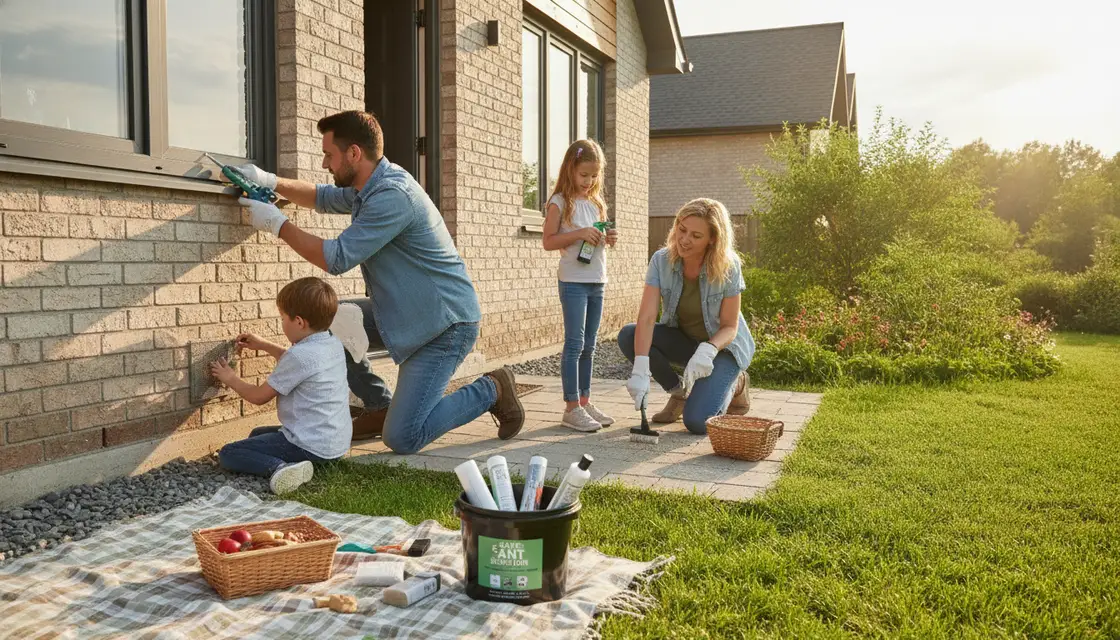
The Ultimate Guide to Sealing Your Home Against Ants: A Parent’s Weekend Strategy
Affiliate Disclosure: This post contains affiliate links. If you purchase a tool or sealant through these links, we may earn a small commission at no extra cost to you. We only recommend products that meet our safety standards for family homes.
To effectively seal your house from ants, you must focus on creating a physical barrier at every potential entry point. This involves inspecting the perimeter of your home for cracks in the foundation, gaps around window frames, and spaces under door sweeps. Using high-quality silicone caulk, weather stripping, and door gaskets ensures that ants cannot follow pheromone trails into your living spaces.
By prioritizing these structural fixes, you reduce the need for reactive measures like sprays or baits. Sealing is the most effective, non-toxic "long game" strategy for parents who want to keep their kitchen counters crumb-free and their toddlers safe from unwanted pests.
Why This Guide is for You
I know exactly how stressful it is to walk into the kitchen for a midnight bottle feeding or a quick morning coffee only to find a line of sugar ants marching across the counter. It feels like a violation of your "safe space."
If you are a busy parent or pet owner, you don't have time for complicated chemical regimens, and you certainly don't want harsh residues where your kids play. This guide is designed to be a "weekend warrior" project—tasks you can knock out during nap times or on a Saturday morning to stop the problem before it starts.
The Parent’s Toolkit: What You’ll Need
Before you start, gather these supplies. I recommend keeping these in a dedicated "Home Defense" bin so you can do quick touch-ups whenever you spot a new gap.
- High-Quality Caulk Gun: Look for one with a "drip-free" feature to avoid making a mess on your floors.
- 100% Silicone Caulk: It’s durable, waterproof, and doesn’t shrink like acrylic.
- Weather Stripping: Adhesive foam or rubber strips for windows and doors.
- Door Sweeps: To close that tempting gap between the bottom of the door and the threshold.
- Flashlight: To find those tiny cracks in dark corners or under the sink.
For a complete list of recommended supplies that meet our safety criteria, check out The Safe Ant Solution Master Buying Guide: Protect Your Home Without the Harsh Chemicals.
Comparing Sealant Types for Family Safety
| Sealant Type | Best Use Case | Safety Profile | Durability | | :--- | :--- | :--- | :--- | | 100% Silicone Caulk | Windows, baseboards, and sinks. | Low odor once cured; water-resistant. | Very High (10+ years) | | Acrylic Latex (Painter's Caulk) | Interior trim where you want to paint over it. | Low VOCs; easy water cleanup. | Moderate (Tends to shrink) | | Expandable Spray Foam | Large gaps around plumbing or foundation. | High odor during application; must be kept away from kids until dry. | High (But can be messy) | | Weather Stripping | Moving parts of windows and doors. | Non-toxic; physical barrier only. | Moderate (Needs replacement every 2-3 years) |
Step-by-Step: The Weekend Seal-Up
#### 1. The "Flashlight Test" Wait until evening or dim the lights. Have one person stand outside a door or window with a bright flashlight while you stay inside. If you see light peeking through, an ant can definitely get through. Focus on the corners of door frames and where the window meets the sill.
#### 2. Sealing the Kitchen "Hot Zones" Ants are usually in the kitchen for a reason. Check under the sink where the pipes enter the wall. There is often a large, ragged hole behind the escutcheon plate (the metal ring). Fill this gap with silicone caulk or a bit of steel wool topped with caulk to prevent ants and even small rodents from entering.
#### 3. Updating Door Sweeps If you can see daylight under your front or back door, your "Welcome" mat is basically an "Enter Here" sign for Odorous House Ants. Installing a screw-on or adhesive door sweep takes ten minutes but provides a massive barrier.
#### 4. Foundation and Exterior Check Walk around the outside of your home. Look for where the siding meets the foundation. Use a clear outdoor-rated silicone to seal any visible cracks. Be sure to trim back any bushes or tree branches that touch the house; these act as "ant bridges" that bypass your ground-level defenses.
Common Beginner Mistakes
- Sealing over a dirty surface: Caulk won't stick to dust or old, peeling sealant. Wipe the area with a 50/50 vinegar and water solution first to remove pheromone trails and dirt.
- Using the wrong caulk: Avoid cheap "painter's caulk" for exterior gaps. It will crack in the sun, and the ants will be back in a month.
- Ignoring the "Invisible" Gaps: Don't forget the gaps behind electrical outlets on exterior walls. You can buy foam gaskets that sit behind the plastic cover plate to stop drafts and ants.
- *Sealing ants inside:* If you already have a massive infestation, sealing them in might force them to find new exits in your walls. If you see active trails, you may want to use a contained baiting system first. Read our Terro Liquid Ant Baits: A Detailed Safety Review for Parents and Pet Owners to see if that's the right move for your home.
Frequently Asked Questions
Q: Is caulk safe to use around my toddler? A: Most silicone and acrylic caulks are very safe once they are fully cured (usually 24 hours). However, during application, some can emit "vinegary" smelling fumes (acetic acid). I always recommend doing your sealing projects while the kids are out of the house or at least in a different room with a window open.
Q: Do I need to seal the second floor? A: While most ants start at the ground level, Carpenter Ants are excellent climbers. If you have trees touching your roofline, you should check the seals on your upper-story windows as well.
Q: Can I just use tape? A: In an emergency, blue painter's tape or duct tape can block a hole, but ants can often chew through or walk around the adhesive. It’s a "Quick Fix," but not a permanent solution.
Q: How often should I re-check my seals? A: I make it a habit to do a "perimeter walk" every spring and autumn. Houses shift, and wood expands and contracts, which can create new cracks over time.
Final Thoughts for Parents
Sealing your home is the ultimate "set it and forget it" pest control method. It’s a little bit of work upfront, but the peace of mind you get knowing you’ve physically blocked the entrance is worth every minute. Plus, you’ll probably see a small dip in your energy bills from closing those drafts!
Stay safe, stay proactive, and keep those counters clear!