
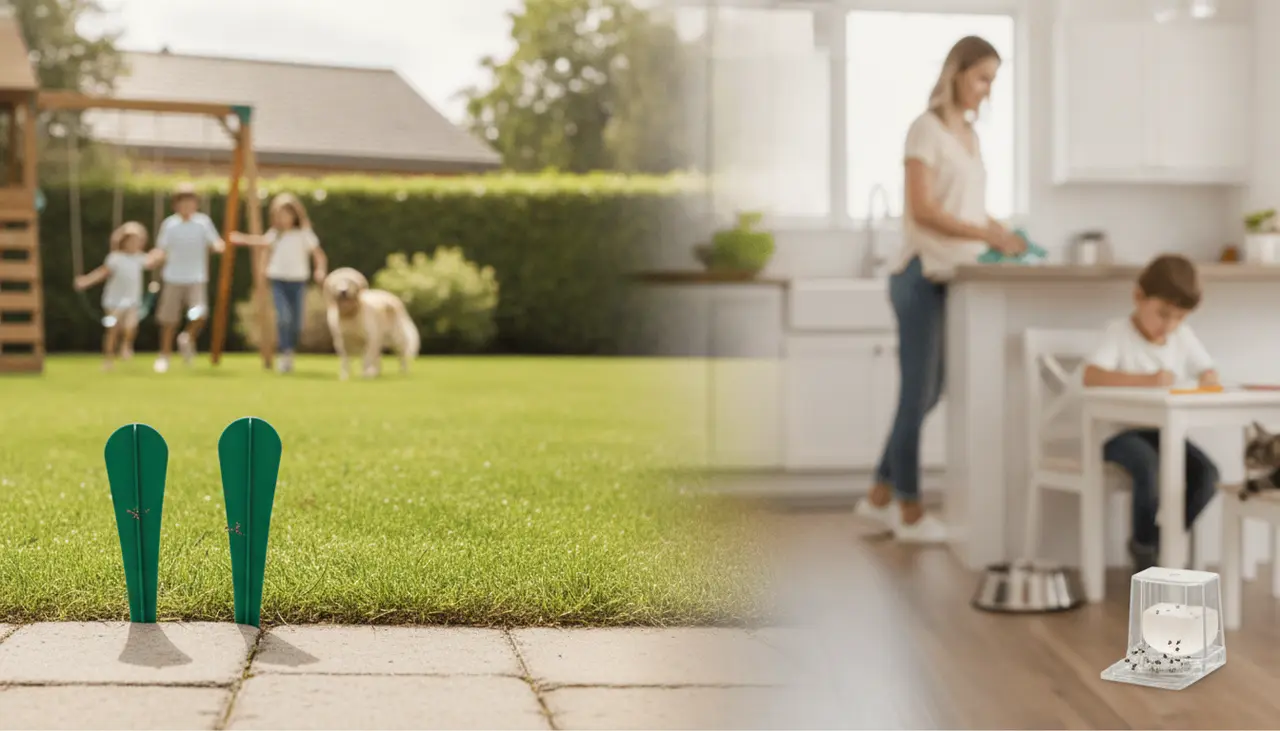
Outdoor Ant Stakes vs. Indoor Baits: Which is Safer for Your Family?
Affiliate Disclosure: This post contains affiliate links to products we trust. If you click a link and make a purchase, we may earn a small commission at no extra cost to you.
If you’ve ever walked into your kitchen to find a line of ants marching toward a stray juice box, I know exactly how your heart sinks. I’ve been there—juggling a toddler on one hip while trying to figure out how to stop the "ant parade" without spraying anything that could hurt my kids or our dog.
When it comes to stopping these tiny intruders, you generally have two choices: stop them outside before they get in, or bait them once they’ve already made themselves at home.
The Short Answer: Which is better? For most families, outdoor ant stakes are the superior choice for long-term control. They allow you to target the colony at its source in the yard, keeping the active ingredients out of your living spaces, bedrooms, and play areas.
Indoor baits are excellent for "quick fixes" when you have an active trail in the pantry, but they require much more vigilance to keep them out of reach of curious little hands and paws.
Who This Guide Is For
This guide is specifically for parents and pet owners who want to reclaim their homes from sugar ants, odorous house ants, or pavement ants. If you are looking for a way to handle a pest problem during a nap time or in the twenty minutes after work, you're in the right place. We prioritize safety and efficiency over industrial-strength "scorched earth" methods.
---
Comparison at a Glance: Outdoor Stakes vs. Indoor Baits
| Feature | Outdoor Ant Stakes | Indoor Liquid/Gel Baits | | :--- | :--- | :--- | | Primary Goal | Colony destruction at the source | Eliminating visible indoor trails | | Safety Profile | High (Kept outside the home) | Moderate (Must be hidden from kids/pets) | | Weather Resistance | High (Designed for rain/sun) | Low (For indoor use only) | | Placement | Perimeter of house/flower beds | Near baseboards, under sinks, behind appliances | | Effort Level | Set it and forget it (3-month life) | Requires monitoring and frequent cleaning |
---
When to Use Outdoor Ant Stakes (The Perimeter Defense)
Outdoor ant stakes, like those from Terro or similar brands, are essentially "bait stations" on a stick. You push them into the soil around the foundation of your home. The goal is to intercept the ants while they are foraging in your mulch or grass—stopping the colony in the yard before they ever reach the patio.
Best for:
- Preventative Maintenance: If you see ants in your yard but not yet in your house.
- Homes with Crawling Babies: Keeping the "poison" outside means one less thing to worry about when your little one is exploring the kitchen floor.
- Large Colonies: These stakes usually hold more bait than indoor versions, allowing them to feed a larger colony over time.
Pros:
- Weather-proof housing protects the bait from rain.
- Keeps the "ant party" (the swarm that happens when baiting) outside.
- Stakes are generally harder for pets to "mess with" if pushed deep into the soil.
Cons:
- Takes longer to see results inside (usually 7-10 days).
- Can be pulled up by older children playing in the yard.
When to Use Indoor Baits (The Quick Fix)
Indoor baits are usually small plastic stations or drops of gel placed directly in the path of an ant trail. They are highly effective because they use the ants' own biology against them; the workers carry the bait back to the queen.
Best for:
- Active Infestations: When you already have ants in the pantry or near the sink.
- Specific "Hot Spots": If you know exactly where they are entering (like a crack behind the dishwasher).
Pros:
- Works very quickly on the immediate "infantry" in your kitchen.
- Easy to monitor if the ants are actually taking the bait.
Cons:
- Safety Risk: Even "child-resistant" stations can be tempting for toddlers.
- The Mess Factor: Baits actually attract more ants initially. Seeing a swarm of ants on your kitchen counter is a lot more stressful than seeing them on a stake in the garden.
---
Common Beginner Mistakes to Avoid
- Placing Stakes Too Far Away: For outdoor ant stakes to work, they need to be near the foundation or along the "ant highways" (like the edge of a walkway). If you put them at the very back of the fence line, the ants will still find your kitchen first.
- Killing the "Scouts": When you see ants on a bait station, your instinct is to grab the Windex and spray them. Don't! You need those ants to stay alive long enough to carry the bait back to the queen.
- Leaving the "Entry Door" Open: Baits and stakes work best when you also address why they are coming in. I highly recommend reading The Ultimate Guide to Sealing Your Home Against Ants: A Parent’s Weekend Strategy to help you close those tiny gaps in your baseboards.
- Ignoring the Source: Often, we find ants because of a spill we missed. Check out our guide on Why Ants Love Your Toddler's Juice Box (and How to Stop Them) to help identify the "magnets" in your home.
---
Safety First: A Note for Parents and Pet Owners
Whether you choose indoor or outdoor options, the "Safe Ant Solution" philosophy is about layers of protection.
- For Outdoor Stakes: Place them behind bushes or underneath heavy decorative rocks where kids don't play.
- For Indoor Baits: Use painter's tape to secure them to the underside of a cabinet or deep inside the back of a pantry shelf where a child’s hand can’t reach.
If you are looking for specific product recommendations that have been evaluated for household safety, our The Safe Ant Solution Master Buying Guide covers the best non-toxic and low-toxicity options on the market.
---
FAQ
Q: Can I use both at the same time? A: Absolutely. In fact, for a heavy infestation, using outdoor stakes to hit the colony and indoor baits to clear the kitchen is the fastest way to get results.
Q: Are outdoor stakes safe for my dog? A: Most stakes use a Borax-based bait which has low toxicity, but the plastic housing can be a choking hazard. Always place stakes in areas where your dog doesn't typically dig or play.
Q: How often should I replace outdoor stakes? A: Most manufacturers recommend every 3 months, or sooner if you’ve had heavy rain or a particularly large ant "surge."
Q: Do these work for Carpenter Ants? A: Most standard stakes are designed for "sugar ants." Carpenter ants often require specialized wood-infesting baits, though some outdoor stakes are labeled for multiple species. Always check the label!